A Step-by-Step Guide to Online Marketing for Therapists

As a health and wellness professional, you are an expert in helping people improve their lives. Marketing, however, might feel like a completely different discipline. The good news is that you don't need to become a marketing guru to grow your practice. A clear, methodical approach to online marketing for therapists can help you connect with the people who need your expertise most. This guide breaks the process down into six manageable steps, turning what seems complex into a straightforward plan for attracting your ideal clients.
Step 1: Identify Your Ideal Client and Niche
The foundation of any successful marketing plan is knowing exactly who you are trying to reach. If you try to speak to everyone, your message will resonate with no one. Start by defining your ideal client. Think beyond basic demographics and consider their psychographics: What are their biggest health challenges? What have they tried in the past that didn't work? What are their goals and motivations for seeking help? Creating a detailed client avatar helps you tailor your messaging and choose the right channels to reach them.
Narrowing your niche is equally important. Instead of being a general wellness coach, you might specialize in helping busy professionals manage stress-related digestive issues. A specific focus makes you the clear choice for a particular group of people. It also simplifies your content creation and marketing efforts. One of the best ways to refine your messaging is by listening to the exact language of your potential patients. When your website and marketing materials use the same words they do to describe their problems, it builds instant trust and rapport.
Step 2: Create a Professional Website That Converts Visitors
Your website is your digital office. It's often the first impression a potential client will have of you and your practice. It needs to be professional, welcoming, and easy to navigate. Your homepage should immediately answer three questions for any visitor: What do you do? Who do you help? How can they get started?
A successful website does more than just provide information; it guides visitors toward taking a specific action. This is known as conversion. For your practice, a conversion might be booking a discovery call, signing up for your newsletter, or downloading a resource. Make sure your contact information and a clear call-to-action (like a "Book a Free Consultation" button) are visible on every page. Ensure your site is mobile-friendly, as many potential clients will find you on their phones. Your website is the central hub of your marketing activities, so investing in a clean, professional design is essential.
Step 3: Develop Content That Builds Trust and Authority
Content marketing is the process of creating and sharing valuable information to attract and engage your target audience. Instead of directly selling your services, you provide helpful content that demonstrates your expertise and builds a relationship with potential clients. This establishes you as a credible and trustworthy authority in your niche.
Your content can take many forms, including:
- Blog Posts: Write articles that answer common questions your ideal clients have. For example, a functional nutritionist could write about "5 Surprising Foods That Impact Gut Health."
- Downloadable Guides: Create longer resources like ebooks or checklists that visitors can receive in exchange for their email address.
- Interactive Quizzes or Calculators: Tools like a "Burnout Risk Assessment" or a "Hormone Health Score" offer personalized value and are highly effective for lead generation. They give potential clients immediate insight while positioning you as the expert with the solution.
The goal is to provide genuine value. When you consistently help people solve small problems with your free content, they will trust you to help them solve bigger problems with your paid services.

Step 4: Implement an Effective Strategy for Online Marketing for Therapists
With a clear niche, a professional website, and some foundational content, you are ready to actively market your practice. The key is to focus your energy where it will have the most impact. You do not need to be active on every platform. Instead, choose one or two channels that align with your ideal client and your strengths.
Some effective channels include:
- Search Engine Optimization (SEO): This is the practice of optimizing your website to appear in search engine results when people look for terms related to your services. It starts with including relevant keywords in your website copy and blog posts so that Google understands what your site is about.
- Social Media: Choose the platform where your ideal clients are most active. A health coach for new moms might find success in Facebook groups, while a practitioner focused on corporate wellness might use LinkedIn. Share your content, engage in conversations, and build a community.
- Email Marketing: Building an email list is one of the most valuable marketing activities you can do. It gives you a direct way to communicate with people who have already expressed interest in your work.
These are just a few of the core lead generation strategies you can use to consistently attract new inquiries.
Step 5: Nurture Leads with Automated Email Sequences
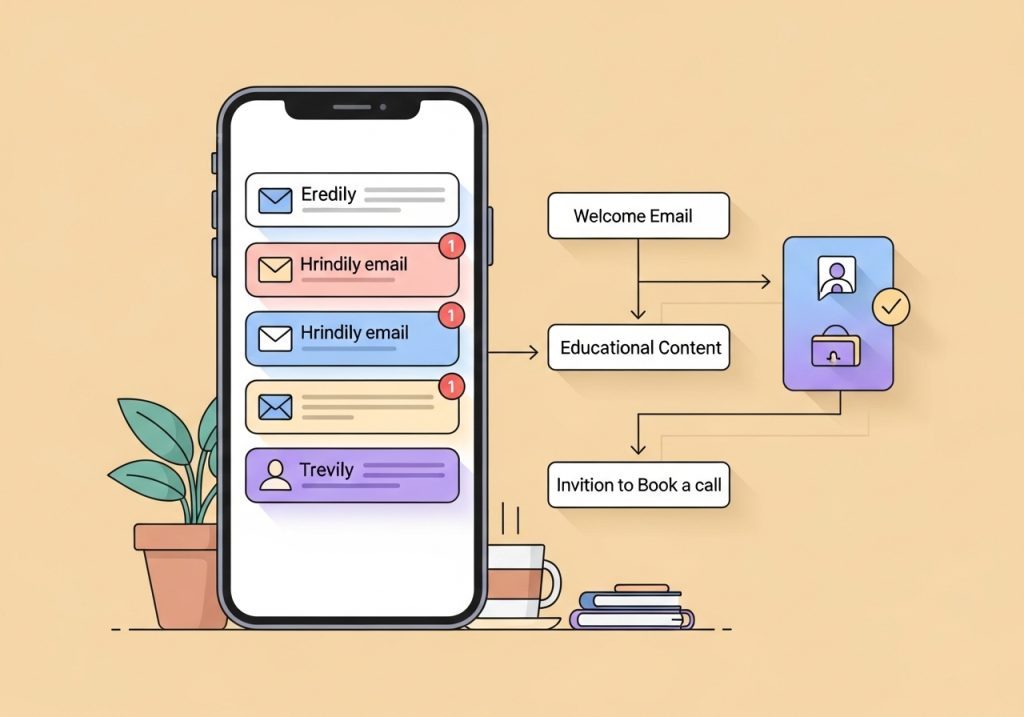
Capturing a potential client's email address is only the beginning. The next step is to nurture that lead, building trust and gently guiding them toward booking a call. An automated email sequence is a powerful tool for this. Once someone downloads a resource or completes a quiz on your site, they can automatically receive a pre-written series of emails.
A simple nurture sequence might look like this:
- Email 1 (Immediate): Delivers the requested resource and welcomes them to your community.
- Email 2 (2 days later): Shares a related blog post or a client success story that builds on the topic of the resource.
- Email 3 (4 days later): Answers a frequently asked question or addresses a common misconception related to your niche.
- Email 4 (7 days later): Invites them to book a free discovery call to discuss their specific goals.
This process builds the relationship over time without requiring manual effort for every new lead. It ensures that when someone does book a call, they are already familiar with your approach and confident in your expertise.
Step 6: Analyze Your Results and Refine Your Approach
Effective marketing is an iterative process. To know what's working, you need to track your results. You don't need complex software for this. Start by monitoring a few key metrics each month:
- Website Traffic: How many people are visiting your website? Where are they coming from (e.g., Google, social media)?
- Leads Generated: How many people downloaded your guide or used your calculator?
- Conversion Rate: What percentage of website visitors take that next step and become a lead?
- Consultations Booked: How many leads ultimately schedule a call with you?
Reviewing this data helps you make informed decisions. If you notice a particular blog post is driving a lot of traffic, create more content on that topic. If your social media efforts are not generating any leads, you might decide to focus more on SEO. Analyzing your data and understanding your customer acquisition cost allows you to invest your time and resources wisely, continually refining your marketing for better results.

Implementing a consistent online marketing strategy does not have to be overwhelming. By following these steps, you can create a system that works for you, attracting a steady stream of ideal clients and allowing you to focus on the work you do best. Start with a solid foundation, build trust through valuable content, and use simple tools to nurture relationships. This methodical process provides the clarity and structure needed to grow your practice effectively.
Ready to Generate More Qualified Leads?
Attracting the right clients starts with offering them real value from the very first interaction. LeadCalculators makes it simple to add an interactive assessment to your website that gives visitors personalized insights and provides you with highly qualified, motivated leads. Stop chasing clients and start attracting them. See how our embeddable calculators can fill your calendar with ideal appointment bookings.
Explore calculator templates and start your free trial today.