How to Create a Customer Profile to Attract Your Ideal Wellness Client

As a health and wellness professional, you want to fill your schedule with clients you can truly help. Yet, so much marketing advice feels like guessing. You create content, run ads, and post on social media, but the leads that come in are often a poor fit. They might not be ready for your services, can't afford them, or aren't committed to the process. The solution isn't to market more, but to market smarter. This starts with building a detailed customer profile that defines exactly who you want to attract.
A customer profile, sometimes called a client avatar or ideal client profile, is a detailed description of your perfect client. It's a fictional character built from the data and experiences of your best real-life clients. Creating this profile moves your marketing from a wide, hopeful net to a precise, magnetic pull that attracts people who are already looking for you. It allows you to create content, services, and messaging that speak directly to their needs, making them feel seen and understood.
Step 1: Gather and Analyze Existing Client Data
The foundation of a strong customer profile is data, not assumptions. Your most valuable insights are hidden within your current and past client base. Start by identifying your "best" clients. These are the people who get great results, value your expertise, are a pleasure to work with, and refer others. Once you have a small group in mind, it's time to dig into the information you already have.
Look for common threads in these key areas:
- Intake Forms: Review the information they provided when they first started. What were their initial complaints, stated goals, and health history? Notice the exact language they used to describe their problems.
- Testimonials and Feedback: What do your favorite clients say about working with you? Their testimonials often highlight what they valued most about your approach, which is a powerful clue about their core motivations.
- Session Notes: Your private notes can reveal patterns in their struggles, breakthroughs, and lifestyle habits. Look for recurring themes across your best clients.
- Direct Conversations and Surveys: Don't be afraid to ask directly. A simple survey can provide immense clarity. By asking effective customer survey questions, you can gather structured data on their goals, challenges, and what they look for in a practitioner.

Compile this information in a spreadsheet or document. Your goal is to move from individual stories to collective patterns. Do you notice that most of your best clients are women between 40-55 struggling with hormonal changes? Or perhaps they are busy professionals dealing with digestive issues and stress? Let the data guide you to these initial conclusions.
Step 2: Identify Core Pains, Problems, and Goals
Once you have the raw data, the next step is to interpret it on a deeper, more emotional level. People seek out a health professional because they have a problem they can no longer solve on their own. Your customer profile needs to capture this struggle with empathy and precision. What is the core pain point that drives them to seek help?
Think about these questions:
- What are their biggest frustrations? Go beyond the surface-level symptoms. A client might say they have "low energy," but the frustration is that they can't keep up with their kids or focus at work.
- What have they tried before? Most clients have tried other solutions that failed. Understanding this helps you position your approach as different and more effective. Did they try restrictive diets, generic supplements, or conventional doctors who dismissed their concerns?
- What are their deepest desires? What does life look like after they've solved their problem? They don't just want "better digestion." They want the freedom to eat at a restaurant without anxiety or the confidence to travel without planning around a bathroom.
- What are their hidden fears? What are they worried will happen if they don't solve this problem? This could be a fear of developing a chronic illness, missing out on life experiences, or feeling like they are failing their family.
This process involves listening carefully to the voice of the customer and using their exact words. When you can describe their problem better than they can, you build instant trust and authority. This understanding forms the heart of your profile.
Step 3: Define Key Demographics and Psychographics
With a clear picture of your ideal client's inner world, you can now add the external details that make the profile complete. This involves both demographics (quantifiable characteristics) and psychographics (attitudes, values, and lifestyle).
Demographics
These are the basic, factual data points about your ideal client. They help you understand where to find them and ensure your services are accessible.
- Age: A general range (e.g., 35-50).
- Gender: Who do you primarily serve?
- Location: Are they local for in-person visits or located anywhere for virtual consultations?
- Occupation: What do they do for a living? This can influence their stress levels, schedule, and income.
- Income Level: A general range helps you price your services appropriately.
- Education Level: This can influence how they research health topics.
Psychographics
These details describe your client's personality, values, and lifestyle. This is often more important than demographics for crafting resonant marketing messages.
- Values: What is most important to them? (e.g., family, career, personal growth, natural living).
- Interests & Hobbies: What do they do for fun? (e.g., yoga, hiking, cooking, reading).
- Information Sources: Where do they get their health information? (e.g., specific podcasts, Instagram accounts, websites, magazines).
- Personality: Are they data-driven and analytical, or are they more intuitive and holistic?
- Buying Habits: Are they early adopters? Do they invest in premium products? Do they prioritize organic and high-quality goods?
Combining demographics and psychographics gives you a multi-dimensional view. You're not just targeting a "45-year-old woman," you're targeting "a 45-year-old marketing director who values work-life balance, listens to The Doctor's Farmacy podcast, and shops at Whole Foods." The difference is immense.
Step 4: Create Your Formal Customer Profile Document
Now it's time to bring all your research together into a single, cohesive document. This formalizes your customer profile and turns it into a practical tool that you can reference daily. Give your profile a name, like "Hormone-Stressed Helen" or "Functional Fitness Frank," to make it more memorable and human.
Your document should include sections for all the information you've gathered:
- Name & Photo: Give your avatar a name and find a stock photo that represents them. This makes the profile feel like a real person.
- Background Summary: Write a short paragraph describing their life, career, and family situation.
- Demographics: List the key demographic points (age, location, occupation, etc.).
- Goals: What are their primary and secondary health and life goals?
- Challenges & Pains: What specific problems and frustrations are they facing? Use their own words here.
- Values & Motivations: What drives their decisions? What do they care about most?
- Watering Holes: Where do they hang out online and offline? List the blogs, social media accounts, podcasts, and influencers they follow.
- A Quote: Create a short quote that summarizes their primary frustration or desire. For example: "I just want to feel like myself again and have the energy to enjoy my life."
Keep this document easily accessible. It should become the filter through which you make all your marketing and business decisions.
Step 5: Use Your Customer Profile in Your Marketing
A customer profile is useless if it just sits in a folder. Its true power comes from its application. This document is your guide for creating a business that consistently attracts the right people.
Here's how to put your customer profile to work:
- Website Copy: Rewrite your homepage, about page, and services pages to speak directly to your profile's pains and goals. Use the keywords and phrases they would use.
- Content Creation: Every blog post, video, or social media update should be created with your profile in mind. Ask yourself: "What question would Helen ask?" or "What topic would help Frank solve a problem?"
- Lead Magnets: Develop free resources that solve a small but significant problem for your ideal client. An interactive calculator, a checklist, or a short guide tailored to their specific needs will be far more effective than a generic offer.
- Service Offerings: Refine your programs and packages to perfectly match the needs and desired outcomes of your ideal client. This knowledge can also help you develop a clear path for them, which you can visualize by building out a customer journey map.
- Paid Advertising: If you use platforms like Facebook or Google Ads, your profile's demographic and psychographic data allows for incredibly precise targeting, saving you money and improving your results.
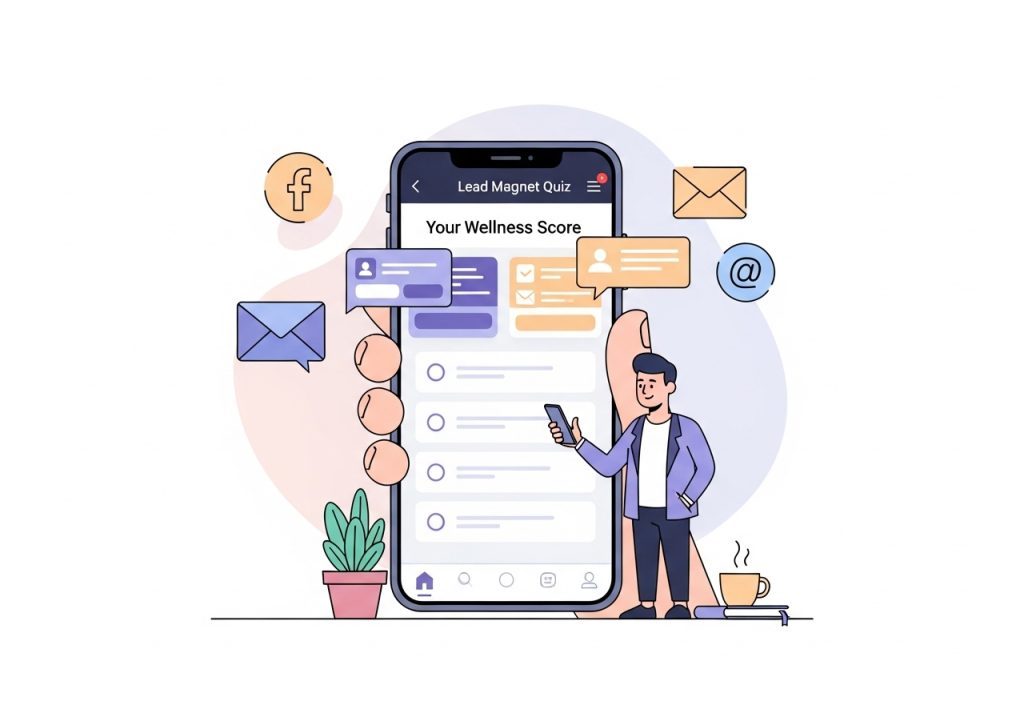
When your marketing speaks to a specific person, the right people feel an immediate connection. They see your practice not just as an option, but as the only option for them.
Creating a customer profile is an investment that pays dividends across your entire practice. It replaces guesswork with clarity, helping you attract better-qualified leads, improve client outcomes, and build a business that is both profitable and fulfilling. By deeply understanding who you serve best, you can build a marketing engine that works for you, consistently bringing your ideal clients to your door.
Turn Your Profile into a Lead-Generating Tool
Now that you know exactly who your ideal client is, the next step is to attract them. LeadCalculators helps you apply your customer profile insights by creating interactive quizzes and assessments that your ideal client will love. Offer them instant, personalized value in exchange for their contact information, and start filling your calendar with qualified leads who are ready to take the next step. See how our calculators can transform your lead generation by exploring our templates today.
Discover LeadCalculators and start attracting your ideal clients.