How to Create a Customer Journey Map for Your Wellness Practice

As a health and wellness professional, you understand the intricate paths that lead to better health. The path your potential clients take to find and hire you is just as complex. A customer journey map is a visual representation of this process, from the moment a person realizes they have a health concern to when they become a satisfied client. Understanding this journey helps you connect with the right people, build trust, and grow your practice.
Mapping this experience allows you to step into your potential client’s shoes. You can identify their questions, anticipate their needs, and pinpoint the exact moments where you can provide value. This guide will walk you through creating a customer journey map tailored for a health and wellness practice, helping you turn prospects into dedicated clients.
What Is a Customer Journey Map?
A customer journey map tells the story of your client's experience with your practice. It visualizes every interaction, from their initial online search for answers to their follow-up appointments. The map tracks their actions, feelings, and questions at each stage. The primary benefit of this exercise is clarity. It helps you stop guessing what potential clients want and start making informed decisions about your marketing, content, and client intake process. By seeing your practice from their perspective, you can identify and fix points of friction you never knew existed.
Step 1: Define Your Ideal Client Persona
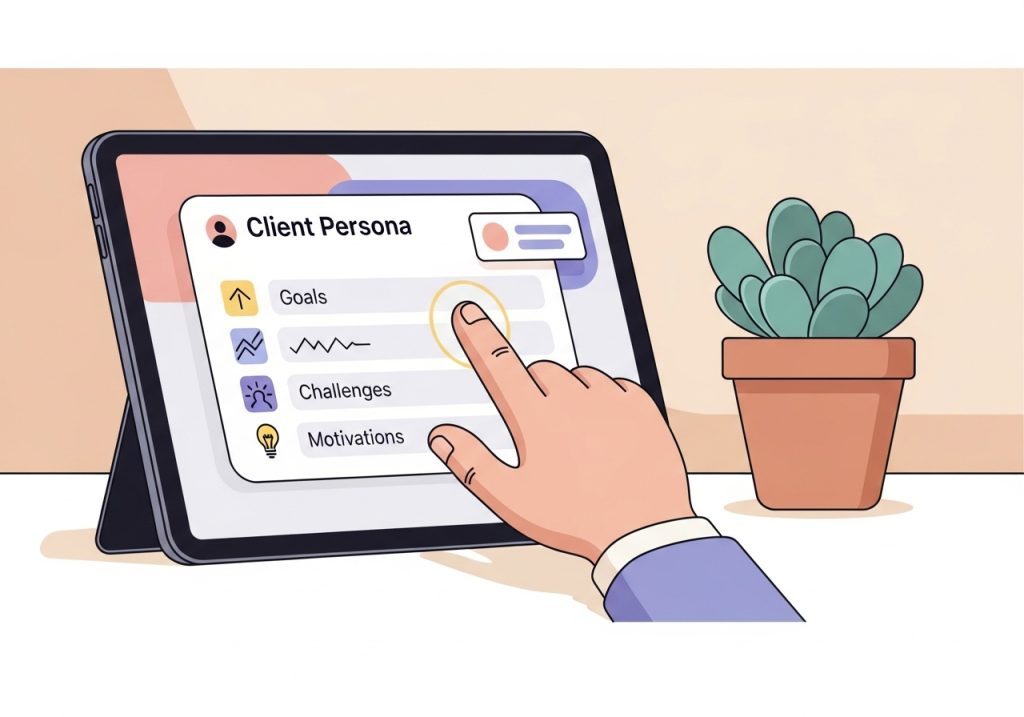
You cannot map a journey without knowing who is on the path. Start by creating a detailed client persona. This is a semi-fictional representation of your ideal client based on real data and educated speculation. The goal is to create a clear picture of the person you are best equipped to help. This goes beyond basic demographics. A strong persona is essential for defining your ideal client and tailoring your services effectively.
Give this persona a name, age, profession, and other relevant details. Most importantly, define their health challenges, goals, and motivations.
- Challenges: What symptoms are they experiencing? Are they frustrated with conventional approaches? What have they tried before that didn't work? Understanding their pain points is critical.
- Goals: What does feeling better look like for them? Are they seeking more energy, relief from a chronic condition, or a proactive wellness plan? Their goals drive their search.
- Information Sources: Where do they look for health information? Do they read blogs, listen to podcasts, follow specific influencers on social media, or rely on referrals from friends? Knowing this tells you where to be visible.
Step 2: Outline the Journey Stages
For a health practice, the client journey generally follows a predictable pattern. Breaking the journey into distinct stages helps organize your thoughts and ensures you don't miss any critical interactions. While you can customize these, a good starting point includes five key stages:
- Awareness: The person experiences symptoms or decides to improve their health. They are not yet looking for a specific practitioner but are searching for information about their condition. They become aware that professionals like you exist as a potential solution.
- Consideration: They have defined their problem and are now actively researching potential solutions. They are comparing different practitioners, reading testimonials, watching videos, and looking for signs of expertise and trustworthiness. They are trying to determine who is the best fit for their unique needs.
- Conversion (Booking): They have done their research and are ready to take action. This stage involves the specific step of booking a discovery call, scheduling an initial consultation, or purchasing a package.
- Onboarding & Service: This is the experience of becoming a new client. It includes the initial consultation, filling out intake forms, receiving their personalized plan, and the first phases of their wellness protocol. A smooth onboarding process is vital for setting the right tone.
- Advocacy: The client has achieved positive results and is now a loyal advocate for your practice. They may leave a positive review, continue with your services for maintenance, or refer friends and family. This stage turns one client into a source of new ones.
Step 3: List All Client Touchpoints
Touchpoints are any place where your ideal client interacts with your practice, directly or indirectly. Go through each stage you defined and list all possible touchpoints. Be thorough, as some may not be obvious. A comprehensive list ensures you see the full picture of their experience.
For example, in the Awareness stage, touchpoints might include a Google search, a blog post they find, an Instagram reel, a podcast interview you did, or a friend's recommendation. In the Consideration stage, touchpoints could be your website's service page, a downloadable guide, patient testimonials, or an interactive quiz that helps them assess their symptoms. The goal is to create a complete inventory of every interaction that influences their decision.

Step 4: Map Client Actions and Emotions
This is where the map comes to life. For each touchpoint, document what your client is doing, thinking, and feeling. This empathetic approach is the key to creating a journey that truly resonates. It is also the foundation for understanding your clients' exact needs and questions so you can answer them effectively.
- Action: What specific action are they taking at this touchpoint? Examples include 'reading a blog post about gut health,' 'comparing practitioner bios,' or 'filling out a contact form'. Be as specific as possible.
- Thought: What questions or thoughts are on their mind? These could be 'Does this practitioner understand my specific problem?', 'Is this worth the investment?', 'What will happen during the first appointment?', or 'This website seems professional and trustworthy.'
- Feeling: What is their emotional state? They may feel hopeful after reading a success story, overwhelmed by conflicting information, confused by your pricing, or skeptical of your claims. Mapping emotions helps you build a more supportive and reassuring experience.
Step 5: Identify Friction and Opportunities
With your map laid out, you can now analyze it for weaknesses and strengths. Where are the points of friction? These are moments where a client might struggle, get confused, or drop off entirely. A common friction point is the transition from Consideration to Booking. A potential client is interested, but they are not sure if they are a good fit for your services. This uncertainty can stop them from taking the next step.
This is also where you find opportunities. The friction point above is an opportunity to provide clarity and value. An interactive calculator, for instance, can help a person self-assess their needs and get instant, personalized feedback. This builds trust and gives them the confidence to book a call. You have answered their question, 'Am I a good fit?' before they even have to ask. Every point of friction is an opportunity to improve your process and stand out.
Improve Your Client Journey with an Interactive Calculator
A customer journey map reveals the moments that matter most. At LeadCalculators, we help you optimize one of the most important stages: Consideration. Our embeddable calculators turn passive website visitors into engaged, qualified leads.
Instead of just reading, a potential client can interact with a 'Hormone Imbalance Quiz' or a 'Gut Health Score' calculator. They answer a few simple questions, receive a personalized score and actionable insights, and provide their contact information in exchange. You get a qualified lead who is already thinking about their health in the specific terms you use in your practice. This makes the first consultation more effective and focused because the client feels seen and understood from the very first interaction.
Step 6: Implement Changes and Refine Your Map
Your customer journey map is a working document, not a one-time project. Based on your analysis, make specific, actionable changes. This could be rewriting your website copy to address common questions, creating a new lead magnet, or streamlining your intake forms. As you implement changes, gather feedback and data to see what works. The insights you gain from this process can also help you improve customer retention by ensuring the client experience is excellent from start to finish.
Periodically revisit and update your map, perhaps once or twice a year, to ensure it reflects the real experience of your clients. A well-maintained map is a powerful tool for sustainable practice growth, helping you consistently attract and retain the clients you are meant to serve.
Turn Your Insights Into Qualified Leads
You've mapped the journey and found the opportunities. Now, it's time to act. LeadCalculators makes it simple to add interactive tools to your site that engage visitors, provide immediate value, and convert the right people into qualified leads. Stop losing potential clients to uncertainty. Give them the clarity they need to take the next step.