What Is Health Equity and Why It Matters for Your Practice

Health equity is the principle that every person has the opportunity to attain their full health potential, and no one is disadvantaged from achieving it because of social position or other socially determined circumstances. For functional medicine doctors, health coaches, and other wellness professionals, understanding this concept is fundamental to providing care that truly works. It shifts the focus from treating symptoms in isolation to understanding the complete context of a person's life and health.
Understanding the Core of Health Equity
Many people confuse health equity with health equality. Health equality means giving everyone the same resources or opportunities. Health equity, on the other hand, means giving people what they need to achieve the best possible health outcomes. According to the Centers for Disease Control and Prevention (CDC), this requires removing obstacles like poverty and discrimination. This often means allocating resources unevenly to meet different needs.
Imagine three people of different heights trying to see over a fence. Equality would give each person the same size box to stand on. The shortest person still might not be able to see. Equity would give each person a box sized specifically for their height, so all three can see over the fence. The goal is the same outcome for everyone, not the same inputs.
This principle is directly tied to the Social Determinants of Health (SDOH). These are the non-medical factors that influence health outcomes and are a primary driver of preventable health disparities. The CDC groups them into five key areas:
- Economic Stability: This includes factors like poverty, employment status, food security, and housing stability. A client's ability to afford nutrient-dense food or safe housing directly impacts their well-being.
- Education Access and Quality: Early childhood education, enrollment in higher education, and literacy levels affect a person's health literacy and their capacity to navigate complex health information.
- Health Care Access and Quality: This involves not just having insurance but also having access to primary care, culturally competent providers, and understanding how to use health services effectively.
- Neighborhood and Built Environment: The environment where a person lives matters. This includes access to healthy foods (the opposite of a food desert), air and water quality, crime rates, and the quality of housing.
- Social and Community Context: This area covers social cohesion, experiences with discrimination, incarceration rates, and civic participation. A strong support system and a sense of belonging are crucial for mental and physical health.
A client's ability to afford organic food, find time for exercise, or manage stress is directly influenced by these factors. A nutrition plan is less effective if a client lives in a food desert or works two jobs to make ends meet. Ignoring these realities leads to ineffective protocols and client frustration.
Why Health Equity Is Crucial for Client Success
Integrating a health equity framework into your practice is not just a social responsibility. It is a clinical necessity for achieving the best results. When you acknowledge the barriers your clients face, you can create more realistic and sustainable health plans. This commitment to a truly patient-centered approach builds trust and shows clients you understand their reality.

Clients who feel seen and understood are more likely to adhere to protocols and stay engaged with their health journey. This leads to better clinical outcomes, more positive testimonials, and a stronger reputation for your practice. By addressing the root causes of health issues, which often lie within the SDOH, you provide a more comprehensive and effective service. This approach can be a significant differentiator, attracting clients who seek a practitioner that appreciates their whole life context.
Practical Steps to Promote Health Equity in Your Services
Applying the principles of health equity does not require a complete overhaul of your practice. Small, intentional changes can make a substantial difference in making your services more accessible and effective for a wider range of people.
- Refine Your Intake Process: Modify your intake forms to include thoughtful questions about life circumstances. Ask about stress levels, work schedules, access to grocery stores, and budget constraints. Frame these questions to understand how you can best support them, not to judge them.
- Use Inclusive Language: Ensure all your communications, from your website to your one-on-one conversations, use inclusive and person-first language. Be mindful of cultural differences, avoid making assumptions about family structure or identity, and always ask for a person's pronouns.
- Offer Flexible Options: Where possible, consider offering different tiers of service, payment plans, or group programs to make your expertise accessible at various price points. Providing virtual consultation options can also remove geographic, mobility, and transportation barriers for many clients.
- Co-create Health Plans: Work with your clients to develop plans that fit their life. Instead of just handing them a protocol, have a conversation about what feels achievable. Ask them, “What is one thing you feel confident you can do this week?” This collaborative approach empowers clients and dramatically increases their chances of long-term success.
Using Technology to Bridge Health Equity Gaps
Gathering detailed information about each client's social determinants of health can feel daunting. This is where technology can streamline the process and provide valuable insights before your first conversation. An interactive calculator is an excellent tool for this.
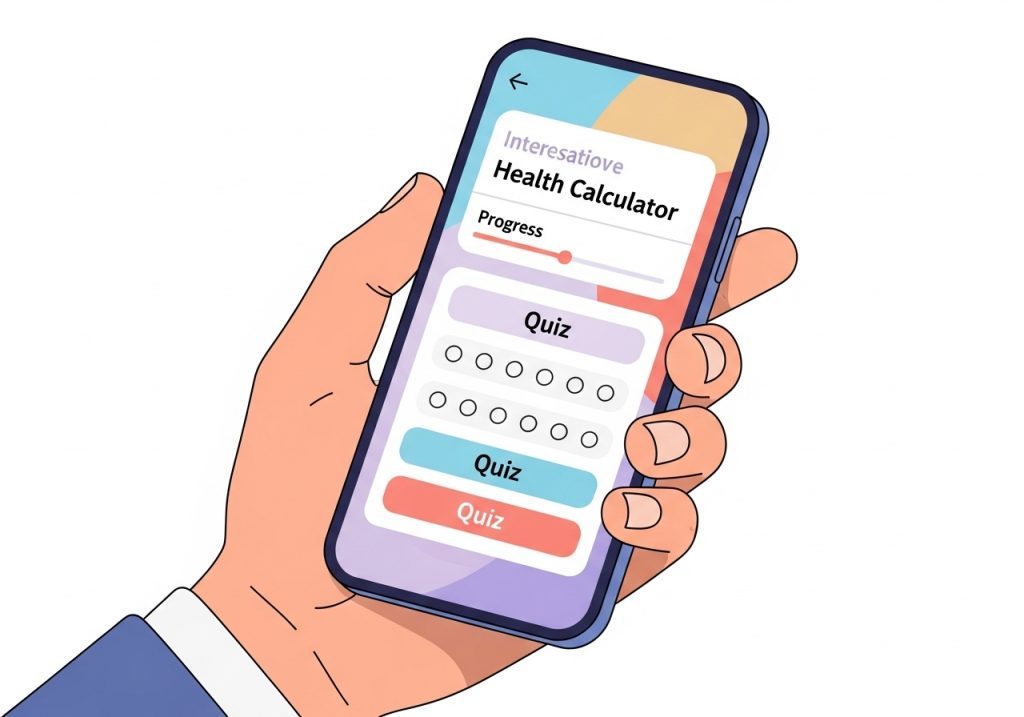
Instead of a static PDF intake form, an embeddable calculator on your website can engage potential clients from their first visit. You can design it to ask key questions about lifestyle, stress, and access to resources in a friendly, non-judgmental way. For example, a “Stress & Burnout Score” calculator can help you understand a client’s daily pressures, while a “Wellness Foundation” calculator could touch on sleep quality, social connection, and food access.
The client receives an instant, personalized score and some initial recommendations, providing immediate value. At the same time, you receive a qualified lead along with a rich summary of their unique circumstances. This data allows you to enter the initial consultation with a much deeper understanding of their needs, enabling you to build rapport faster and design a truly equitable and effective plan from day one.
By using tools that help you see the full picture, you move beyond generic advice and provide the personalized support that drives real, lasting health transformations. This thoughtful approach not only supports your clients better but also strengthens the foundation of your practice, setting you apart as a practitioner who truly cares about outcomes.
Ready to build a more inclusive and effective practice? Our interactive calculators help you understand your clients' unique needs from the very first interaction. See how LeadCalculators can help you gather the insights you need to provide more personalized, equitable care that gets better results. Explore our templates or start a free trial today.