Customer Relations: Definition and 5 Steps for Your Practice

As a health and wellness professional, you are dedicated to helping people achieve better health outcomes. While your clinical expertise is essential, the long-term success of your practice often depends on something just as important: the quality of your client relationships. Strong connections build trust, improve compliance, and lead to more referrals. This entire process is managed through customer relations, and understanding its true meaning can transform how you attract and retain clients.
But what does that term actually mean for a practitioner like you? Let's explore a clear customer relations: definition and a practical, five-step process to strengthen the connections that are the foundation of your practice.
The Core of Customer Relations: Definition in a Health Practice
For a health practitioner, customer relations are the ongoing, intentional process of building and maintaining trust with your clients at every stage of their health journey. It is not a single action but a comprehensive strategy that encompasses all interactions, from the first time someone visits your website to the follow-up care they receive months after their initial consultation. It's the sum of all experiences a person has with your practice.
Effective customer relations in a wellness setting are built on three pillars:
- Communication: Providing clear, timely, and empathetic information that makes clients feel informed and supported.
- Personalization: Understanding each client's unique story, challenges, and goals, then tailoring your approach to them.
- Consistency: Delivering a reliable, professional, and supportive experience every single time they interact with you or your practice.
When these elements are in place, clients feel heard, valued, and confident in your guidance. This transforms a transactional service into a collaborative partnership focused on their well-being, which ultimately helps you get more patients through positive word-of-mouth.
Step 1: Map the Patient Journey to Identify Key Touchpoints
Before you can improve your relationships, you must understand where they are formed. A patient journey map is a visual representation of every interaction a person has with your practice. Taking the time to outline this path helps you see your practice from the client's perspective and identify opportunities for improvement you might otherwise miss.
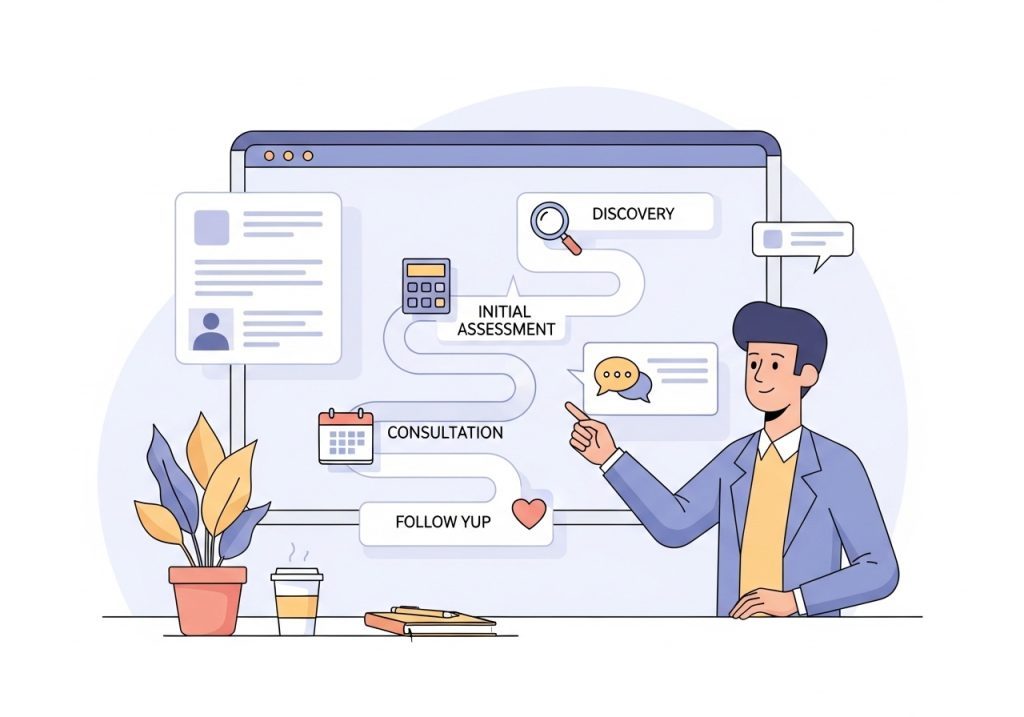
Your map might include these stages:
- Awareness: A potential client finds your blog post, social media profile, or website while searching for answers to their health concerns.
- Consideration: They explore your services, read testimonials, or use an interactive tool like a health quiz or calculator to better understand their situation.
- Booking: They feel confident enough to schedule a discovery call or initial consultation through your online system.
- Onboarding: They receive intake forms, welcome emails, and clear instructions on what to expect next.
- Consultation: The actual appointment where you provide your expertise and build rapport.
- Follow-Up: They receive their personalized plan, check-in emails, and ongoing support to ensure they are on the right track.
- Advocacy: A satisfied client leaves a positive review, refers a friend, or signs up for a long-term program.
At each point, ask yourself: Is this interaction clear? Is it supportive? Does it build confidence? Identifying weak spots is the first step toward strengthening them.
Step 2: Implement Systems for Consistent Communication
Great intentions can fail without solid systems. Relying on memory to follow up with every client is not a sustainable strategy as your practice grows. Technology can help you provide consistent, professional communication without adding hours to your workday, ensuring a high-quality experience for everyone.
Consider implementing tools for:
- Appointment Scheduling: Use a system that sends automatic confirmations and reminders to reduce no-shows and keep clients informed.
- Email Automation: Set up a welcome sequence for new leads or a check-in sequence for active clients to ensure no one is forgotten. This automates nurturing.
- Client Portals: Use a secure platform for sharing documents, plans, and messages. Keeping all communication organized in one place is one of many practical CRM examples for health professionals that simplifies life for both you and your client.
These systems create a reliable framework. They handle the repetitive tasks, freeing you up to focus on the human side of the relationship during your actual consultations.
Step 3: Personalize Interactions to Build Trust
Systems ensure consistency, but personalization is what makes a client feel truly cared for. In a world of automated, generic messages, a personal touch makes a significant difference. It shows you are paying attention to their individual needs and not treating them like just another number.
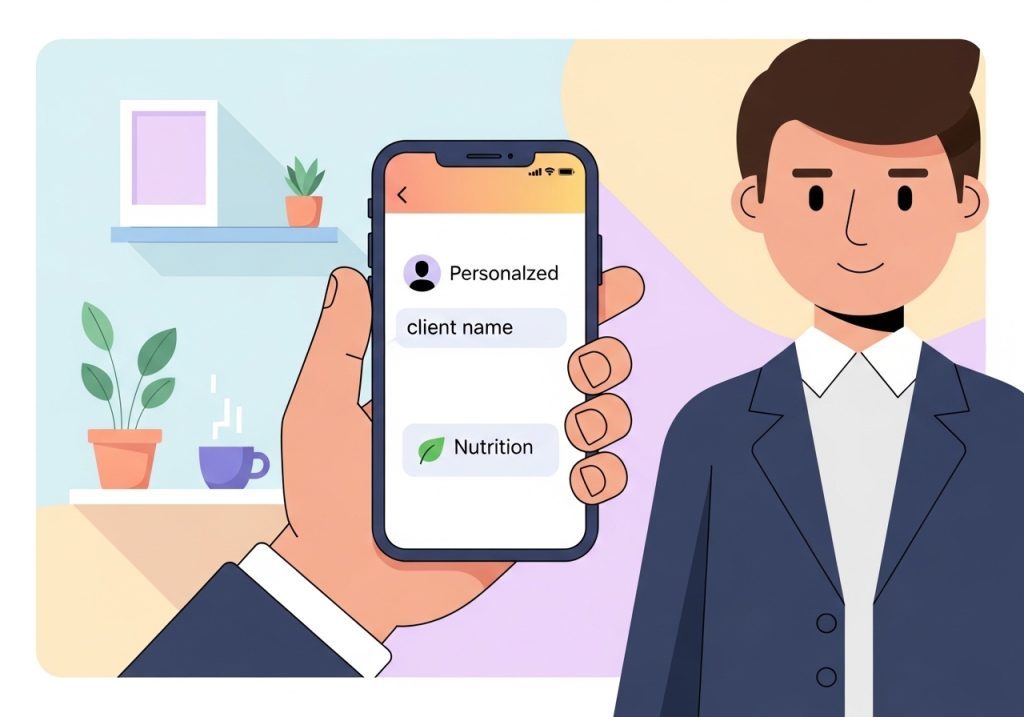
One of the most effective ways to start this process is at the very beginning of the patient journey. Instead of a generic contact form, an interactive calculator (like a Gut Health Score or Hormone Balance Quiz) provides immediate, personalized value. The potential client gets an instant insight into their health, and you receive detailed information you can use to personalize your first conversation.
When you follow up, you can say, "I saw you scored in the 'moderate' range on the adrenal assessment. Let's talk about the specific symptoms you mentioned during our discovery call." This instantly transforms a cold lead into a warm, personalized conversation, establishing you as a practitioner who listens from the start.
Step 4: Gather and Act on Feedback
Customer relations are a two-way street. To know if your efforts are working, you need to ask. Creating simple, low-friction ways for clients to provide feedback is crucial for continuous improvement and shows that you value their perspective.
You can gather feedback by:
- Sending a short, one-question survey a week after an initial consultation.
- Including a simple question in a follow-up email, such as, "On a scale of 1-10, how clear was the plan we created?"
- Checking in during appointments: "What has been the biggest challenge for you so far? What could I do to make it easier?"
The most important part is to act on the information you receive. If a client mentions your intake forms were confusing, revise them. If someone praises your detailed follow-up notes, make sure that process stays in place. Acting on feedback shows clients that their voice matters and that you are committed to providing the best possible experience.
Step 5: Provide Proactive Value Beyond Appointments
Strong relationships are maintained between appointments, not just during them. Proactively providing value shows that you are invested in your clients' long-term success. This builds loyalty and keeps you top-of-mind for referrals. It is a core component of building an effective customer loyalty program that encourages retention.
Send a monthly newsletter with helpful articles, healthy recipes, or tips relevant to your niche. You could also create a small resource library on your website with guides or videos. When you share valuable information without asking for anything in return, you solidify your role as a trusted health partner rather than just a service provider.
Build Better Relationships from the First Click
Mastering customer relations means recognizing that every interaction matters. By mapping the client journey, systemizing communication, personalizing your approach, and acting on feedback, you can build a practice where clients feel genuinely supported and understood. This focus leads to better results for them and sustainable growth for you.
Starting that relationship with a personalized, valuable interaction sets the right tone from the very beginning. LeadCalculators helps you do just that, turning anonymous website visitors into qualified, engaged leads who already feel a connection to your practice before you even speak.
See how an interactive calculator can become the most effective tool in your customer relations strategy. You can build your first one in minutes and start offering instant, personalized insights that attract your ideal clients.