What’s the Difference Between Health and Wellness?

The difference between health and wellness is that health is the state of being free from illness or injury, while wellness is the active process of making choices toward a healthy and fulfilling life. As a practitioner, clearly communicating this distinction is not just a matter of semantics. It is fundamental to how you position your services, attract the right clients, and guide them toward meaningful, lasting outcomes.
Understanding this concept allows you to move conversations beyond the diagnosis and treatment of symptoms. It empowers you to frame your work around proactive, aspirational goals, which is often what motivates a potential client to invest in your programs.
Defining Health: A Foundational State of Being
Health, in its most traditional sense, is about the physical body's condition. It is an objective state that can often be measured through clinical data. Think about standard lab results, blood pressure readings, diagnostic imaging, and the absence of a diagnosable disease. When a person is in good health, their bodily functions are operating within normal parameters. The World Health Organization (WHO) famously defined it in 1948 as "a state of complete physical, mental and social well-being and not merely the absence of disease or infirmity."
Key aspects of health include:
- Absence of Disease: The primary definition revolves around not having an acute or chronic illness.
- Objective Metrics: It is frequently quantified with numbers and clear medical assessments. For example, blood glucose levels are either within a healthy range or they are not.
- A State, Not a Process: A person can be considered healthy at a single point in time. It is a snapshot of their physical condition.
While essential, focusing only on health can be limiting. A client can have perfect lab results and still feel unfulfilled, stressed, or emotionally drained. This is where the concept of wellness becomes critical.
Defining Wellness: An Active, Multidimensional Pursuit
Wellness goes far beyond the physical. It is a holistic concept that encompasses the whole person. Unlike health, which is a state you have , wellness is a process you do. It is the conscious, self-directed, and evolving process of achieving one's full potential. As one academic review puts it, wellness is the state of living a healthy lifestyle. It requires active participation and making intentional choices.
Wellness is often broken down into several interconnected dimensions, touching on the core principles of holistic medicine. These dimensions include:
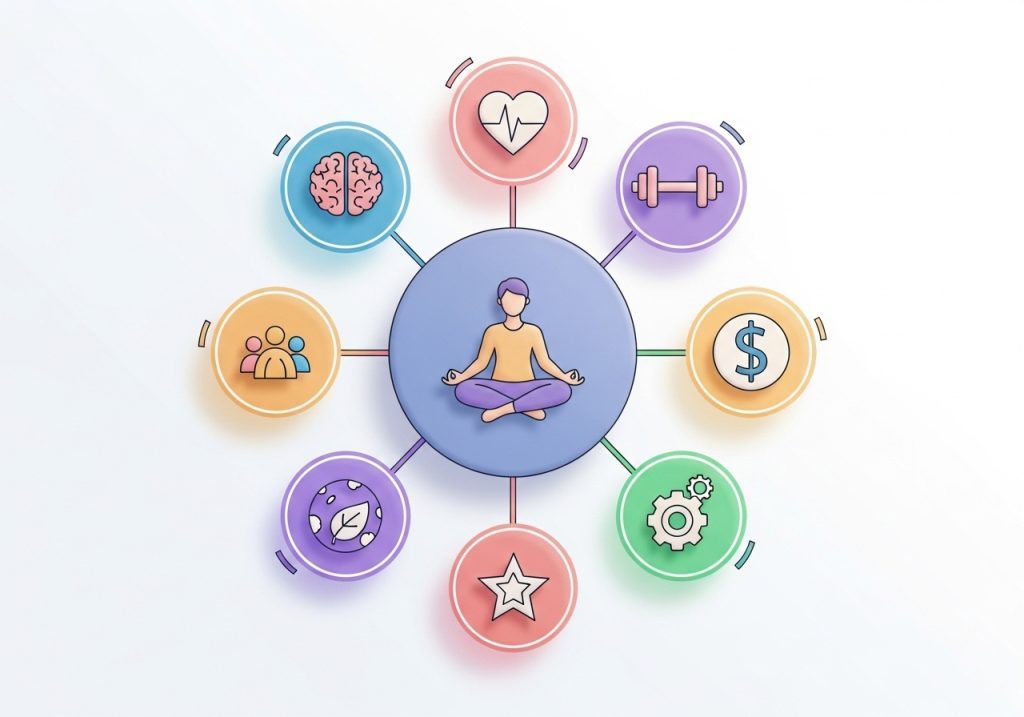
- Physical: Recognizing the need for physical activity, diet, sleep, and nutrition.
- Emotional: Coping effectively with life and creating satisfying relationships.
- Intellectual: Recognizing creative abilities and finding ways to expand knowledge and skills.
- Social: Developing a sense of connection, belonging, and a well-developed support system.
- Spiritual: Expanding a sense of purpose and meaning in life.
- Environmental: Occupying pleasant, stimulating environments that support well-being.
- Financial: Satisfaction with current and future financial situations.
- Occupational: Personal satisfaction and enrichment from one's work.
Someone can have a chronic health condition, like diabetes, but still achieve a high degree of wellness by actively managing their emotional, social, and spiritual needs.
The Key Difference Between Health and Wellness in Practice
For health and wellness professionals, the distinction is crucial for client communication and marketing. Your services likely address both, but your clients may only be thinking about their immediate health problems. Educating them on the broader concept of wellness can create a more compelling case for your approach. According to Sanford Health, health is the goal and wellness is the active process of achieving it.
Here is a simple breakdown:
- Health is a noun; wellness is a verb. Health is a state of being, while wellness is a process of living.
- Health is reactive; wellness is proactive. People often seek to restore health when it is lost. Wellness is about proactively building a lifestyle that supports long-term vitality.
- Health is one-dimensional; wellness is multidimensional. Health focuses primarily on the physical body. Wellness integrates the mind, body, and spirit.
When you market your practice, are you speaking only to the pain points of poor health? Or are you also painting a picture of what optimal wellness looks like? The latter is often a more powerful motivator for attracting clients who are ready to commit to transformative change.
How to Assess Wellness and Attract Qualified Leads
A significant challenge is that wellness feels subjective and difficult to measure. How can you demonstrate progress in a client's social or emotional well-being? How can a potential client understand where they stand before they even speak with you? This is where an interactive assessment tool becomes invaluable, forming a key part of your strategy to attract new clients consistently.

An online wellness calculator or quiz allows a visitor to your website to answer a series of questions related to the different dimensions of wellness. In just a few minutes, they receive a personalized wellness score. This single step accomplishes several important goals:
- It Provides Instant Value: The visitor gets immediate, personalized insight into their current state of wellness, making the abstract concept tangible.
- It Educates and Qualifies: The quiz itself teaches them about the multidimensional nature of well-being, naturally aligning them with your holistic philosophy.
- It Captures High-Intent Leads: To get their results, they provide their name and email. This is not just any lead; it is someone who has actively engaged and shown interest in improving their well-being.
Instead of a generic "Contact Us" form, a wellness assessment serves as a powerful and effective lead magnet that starts the client relationship on the right foot.
From Insight to Action: Turning Wellness Scores into Client Results
The wellness score generated by a calculator is not an endpoint. It is the perfect starting point for a conversation. When a new lead comes through with a detailed report of their results, your first consultation is already more focused and productive. You can immediately discuss the areas where they scored lower and connect those challenges to the solutions you provide. This data makes the process of how to follow up with potential clients more targeted and effective.
This data-driven approach builds credibility and trust. It shows that you have a structured process for helping clients achieve their goals. By quantifying their starting point, you also create a clear benchmark to demonstrate progress and prove the value of your programs over time.
Are you ready to stop just talking about wellness and start measuring it for your clients? An interactive calculator can transform your lead generation process, helping you attract more qualified clients and fill your schedule with people who are committed to their journey.
Transform abstract wellness goals into measurable results. LeadCalculators helps you create interactive assessments that provide instant value to your audience and deliver qualified leads to your inbox. Guide potential clients from curiosity to commitment by giving them personalized insights they can't ignore. Explore our templates or start your free trial to see how a simple calculator can become your most effective marketing tool.