What is CRM in Marketing? A Guide for Wellness Practitioners

As a health and wellness practitioner, you juggle many responsibilities, from creating client protocols to managing appointments. Your marketing efforts might feel like another plate to keep spinning. If you've heard the term "CRM" but aren't sure how it fits into your practice, you're not alone. So, what is CRM in marketing and why should it matter to you? Simply put, it's a technology designed to organize and manage your relationships with potential and current clients, saving you time and helping you provide a more personalized experience.
A good system for managing relationships is the foundation of a successful practice. It allows you to track every interaction, from the first time someone visits your website to the moment they become a long-term client. This guide breaks down what a CRM is, how it works in a wellness setting, and how you can use one to grow your practice without adding technical stress to your day.
Step 1: Understand the Definition of a CRM
CRM stands for Customer Relationship Management. At its core, a CRM is software that acts as a centralized database for all information related to your clients and leads. Think of it as a smart, digital filing cabinet for every person you interact with in your business. Instead of scattered information across spreadsheets, email inboxes, and paper notes, everything is organized in one secure place.
A CRM stores more than just basic contact information. For each person, you can track:
- Contact Details: Name, email, phone number, and social media profiles.
- Communication History: A complete log of emails, phone calls, and meetings.
- Client Notes: Details from your discovery calls, session notes, health goals, and progress updates.
- Lead Source: How they found you, whether through a referral, a social media post, or your website.
- Key Dates: Important milestones like their first appointment or program start date.
By consolidating this data, a CRM provides a complete picture of each client relationship. This single source of truth eliminates the guesswork and administrative work of piecing together a client's history. It empowers you to build stronger connections and provides the foundation for improving client relations at every stage.
Step 2: See How a CRM Works in a Health Practice
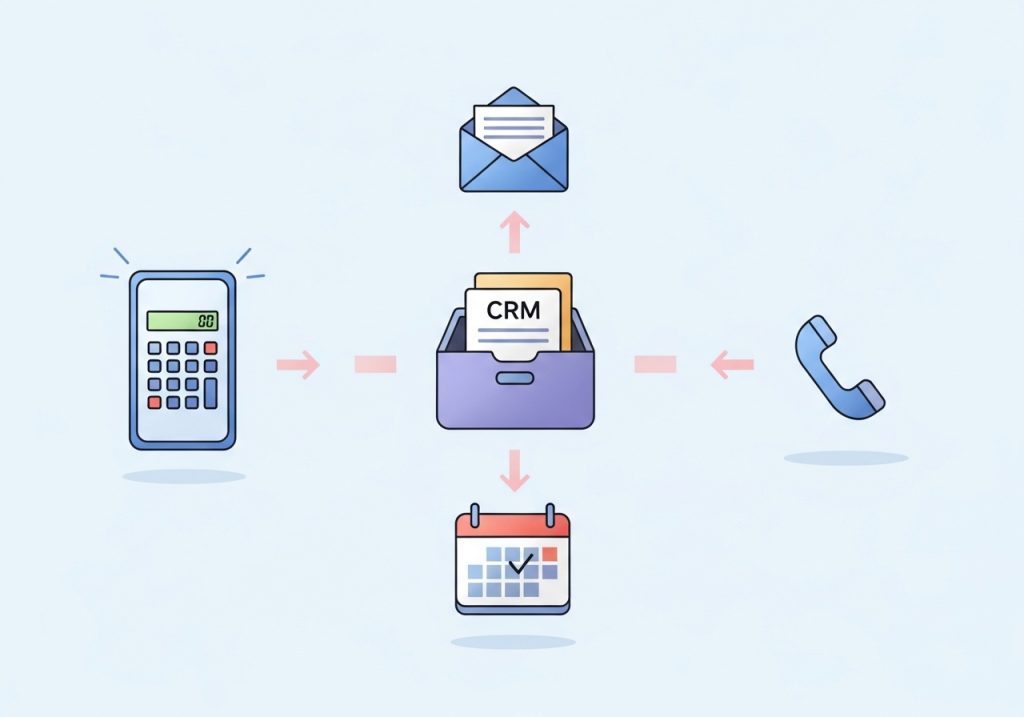
Understanding the definition is one thing, but seeing a CRM in action clarifies its value. Imagine a potential client, let's call her Jane, visits your website because she is struggling with digestive issues. She finds your "Gut Health Score" calculator, answers a few questions, and receives a personalized score with initial recommendations.
Here’s what happens next with a CRM in place:
- Automatic Lead Capture: The moment Jane submits the calculator, her contact information and her gut health score are automatically added to your CRM as a new lead. A tag is applied, such as "Digestive Health Lead."
- Personalized Follow-Up: This action can trigger an automated email sequence. The first email thanks her for taking the quiz and provides a bit more value related to her results. Because she is tagged, the emails she receives are specifically about improving gut health, not general wellness.
- Tracked Engagement: Your CRM shows you that Jane opened the emails and clicked a link to a blog post you wrote about bloating. When she books a discovery call through your online scheduler, that appointment is automatically logged in her CRM profile.
- Informed Consultation: Before your call with Jane, you open her profile in your CRM. You see her initial score, the emails she has engaged with, and the notes from her booking. You can start the conversation already understanding her primary concerns, making the call far more effective and personalized.
This automated and organized workflow ensures no potential client is forgotten. It creates a seamless and professional experience that builds trust before you even have your first conversation. It’s a practical system for mapping out the entire client journey from initial interest to active client.
Step 3: Connect Your Lead Generation to Your CRM
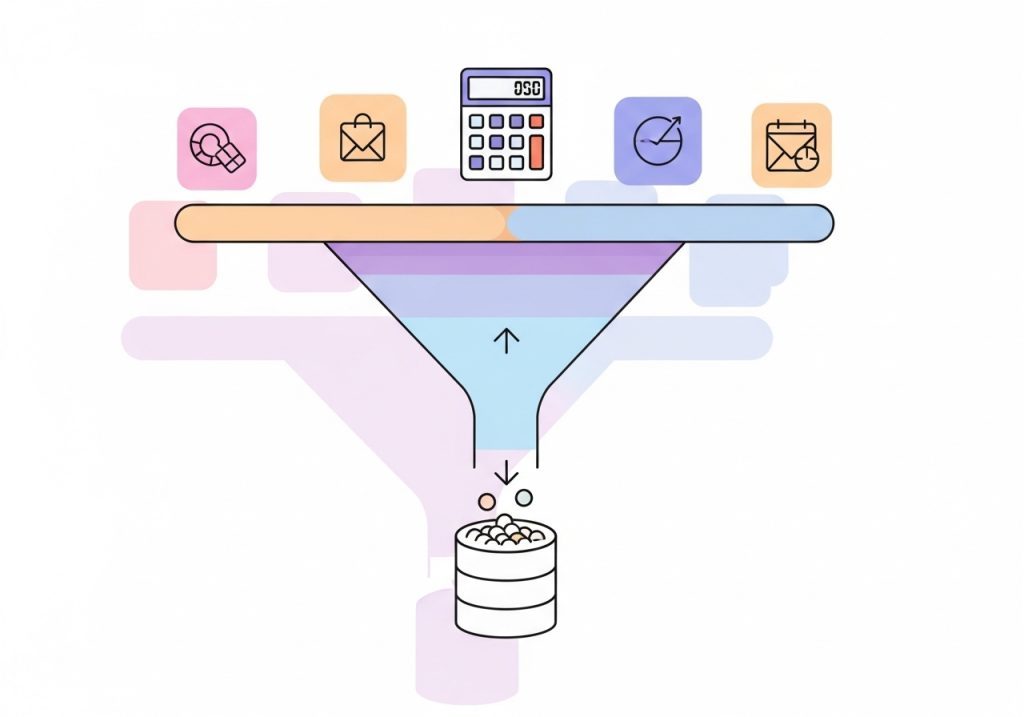
A CRM is most effective when it is consistently filled with qualified leads. While you can manually enter new contacts, the real power comes from automating this process. Connecting your lead generation tools directly to your CRM saves countless hours of administrative work and prevents potential clients from slipping through the cracks.
For health practitioners, common lead generation sources include:
- Website Forms: Your standard "Contact Us" or discovery call request forms.
- Appointment Schedulers: Tools like Calendly or Acuity Scheduling can create new contacts in your CRM when a call is booked.
- Interactive Tools: Quizzes, assessments, and calculators are excellent for capturing high-intent leads. When someone takes the time to complete a calculator, they are actively seeking a solution to a problem you can solve.
Integrating these tools means that new information flows into your system automatically. This allows for immediate action, such as sending a welcome email or assigning a follow-up task. It also enriches your data, helping you understand which marketing channels are bringing in the best leads. For example, by tagging leads from different sources, you can begin segmenting your audience for personalized communication, ensuring your marketing messages are always relevant.
Step 4: Choose the Right CRM for Your Practice
The market is full of CRM options, and it's easy to feel overwhelmed. Many are built for large sales teams and have complex features you will never use. The key is to find a tool that fits the specific needs of a solo practitioner or small wellness clinic. Look for simplicity, ease of use, and the right integrations.
What to Look For in a CRM:
- Intuitive Interface: You should be able to navigate the system easily without extensive training. If it feels complicated during the free trial, it will likely become a source of frustration.
- Key Integrations: Ensure the CRM can connect with the tools you already use. Essential integrations often include your email marketing provider (e.g., ActiveCampaign, ConvertKit), your calendar scheduler, and your website platform.
- Customization: Your practice is unique. A good CRM will allow you to create custom fields to track information specific to your clients, such as their primary health concerns or program type.
- Affordable Pricing: Start with a basic plan. You don't need an expensive, enterprise-level system. Many CRMs offer free or low-cost tiers that are perfect for getting started. You can always upgrade as your practice grows.
Some CRMs are even designed specifically for health professionals and may include features like HIPAA compliance. However, a general-purpose, user-friendly CRM is often more than enough to get started. The goal is to choose a tool that reduces your administrative burden, not one that adds another layer of complexity to your work.
Ultimately, a CRM is a tool to help you build and maintain strong client relationships at scale. By centralizing information and automating routine communication, it frees you up to focus on the work that truly matters: helping your clients achieve their health goals. It’s no longer just a question of "what is CRM in marketing," but rather how you can use this technology to create a more organized, efficient, and caring practice. The first step is to assess your current method for tracking leads and clients. From there, you can explore simple tools that bring structure to your process and support your practice’s growth.
A CRM works best when it's fueled by a steady stream of qualified leads. If you want to stop chasing clients and start attracting people who are ready for your help, an interactive calculator is one of the most effective tools available.
LeadCalculators provides embeddable wellness calculators that capture high-intent prospects by offering them instant, personalized insights. These leads can flow directly into your CRM, filling your pipeline and your calendar with motivated individuals. See how it works and find the perfect calculator for your practice.